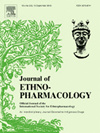
《民族藥理學(xué)雜志》以國際公約確立的原則為基礎(chǔ),致力于交流關(guān)于人們使用植物、真菌、動物、微生物和礦物質(zhì)及其生物和藥理作用的信息和了解。早期的人們面對疾病和疾病,在動植物王國發(fā)現(xiàn)了大量有用的治療劑。這些藥物的經(jīng)驗知識和它們的毒性潛力是通過口頭傳統(tǒng),有時記錄在草藥和其他本草文獻(xiàn)。當(dāng)今許多有價值的藥物(如阿托品、麻黃素、阿波克拉林、地高辛、利血平)是通過研究當(dāng)?shù)氐闹委煼椒ǘ_始使用的。化學(xué)家們繼續(xù)使用植物性藥物(如嗎啡、紫杉醇、絨猴堿、奎尼丁、依米汀)作為原型,試圖開發(fā)出更有效、毒性更小的藥物。近年來,保護(hù)地方知識、促進(jìn)初級衛(wèi)生保健中的土著醫(yī)療系統(tǒng)和保護(hù)生物多樣性已成為所有在社會科學(xué)和自然科學(xué)交界工作的科學(xué)家,特別是民族藥理學(xué)家更加關(guān)心的問題。民族藥理學(xué)家認(rèn)識到國家對其自然資源的主權(quán)權(quán)利,特別關(guān)注地方人民進(jìn)一步利用和開發(fā)其本土資源的權(quán)利。因此,今天的民族藥理學(xué)研究包括以下多學(xué)科的努力:?本土醫(yī)學(xué)知識文檔,?對本土藥物進(jìn)行科學(xué)研究,以便長期為研究區(qū)域的衛(wèi)生保健改善做出貢獻(xiàn)?從現(xiàn)有的本土藥物中尋找獨特的藥理原理。《民族藥理學(xué)雜志》發(fā)表了關(guān)于過去和現(xiàn)在傳統(tǒng)醫(yī)學(xué)中使用的植物和動物物質(zhì)的生物活性觀察和實驗研究的原始文章。該雜志將特別歡迎跨學(xué)科的論文與民族藥理學(xué),民族植物學(xué)或民族化學(xué)方法的土著藥物的研究。人類學(xué)和民族植物學(xué)領(lǐng)域的研究報告屬于該雜志的范圍。特別歡迎涉及藥理和毒理作用機(jī)制的研究。如果有助于了解特定的民族藥理學(xué)問題,將考慮臨床療效研究。雜志歡迎在上述領(lǐng)域的評論文章,特別是那些強調(diào)多學(xué)科的民族藥理學(xué)性質(zhì)。評論只接受邀請。
The Journal of Ethnopharmacology is dedicated to the exchange of information and understandings about people's use of plants, fungi, animals, microorganisms and minerals and their biological and pharmacological effects based on the principles established through international conventions. Early people confronted with illness and disease, discovered a wealth of useful therapeutic agents in the plant and animal kingdoms. The empirical knowledge of these medicinal substances and their toxic potential was passed on by oral tradition and sometimes recorded in herbals and other texts on materia medica. Many valuable drugs of today (e.g., atropine, ephedrine, tubocurarine, digoxin, reserpine) came into use through the study of indigenous remedies. Chemists continue to use plant-derived drugs (e.g., morphine, taxol, physostigmine, quinidine, emetine) as prototypes in their attempts to develop more effective and less toxic medicinals.In recent years the preservation of local knowledge, the promotion of indigenous medical systems in primary health care, and the conservation of biodiversity have become even more of a concern to all scientists working at the interface of social and natural sciences but especially to ethnopharmacologists. Recognizing the sovereign rights of States over their natural resources, ethnopharmacologists are particularly concerned with local people's rights to further use and develop their autochthonous resources.Accordingly, today's ethnopharmacological research embraces the multidisciplinary effort in the:? documentation of indigenous medical knowledge,? scientific study of indigenous medicines in order to contribute in the long-run to improved health care in the regions of study, as well as? search for pharmacologically unique principles from existing indigenous remedies.The Journal of Ethnopharmacology publishes original articles concerned with the observation and experimental investigation of the biological activities of plant and animal substances used in the traditional medicine of past and present cultures. The journal will particularly welcome interdisciplinary papers with an ethnopharmacological, an ethnobotanical or an ethnochemical approach to the study of indigenous drugs. Reports of anthropological and ethnobotanical field studies fall within the journal's scope. Studies involving pharmacological and toxicological mechanisms of action are especially welcome. Clinical studies on efficacy will be considered if contributing to the understanding of specific ethnopharmacological problems. The journal welcomes review articles in the above mentioned fields especially those highlighting the multi-disciplinary nature of ethnopharmacology. Commentaries are by invitation only.
| 影響因子 | h-index | Gold OA文章占比 | 研究類文章占比 | OA開放訪問 | 平均審稿速度 |
| 5.195 | 170 | 5.42% | 84.73% | 未開放 | 約3.0個月 |
SCI熱門推薦期刊 >
SCI常見問題 >
職稱論文常見問題 >

![PLANTA MEDICA]](/qk/img/634fcfb0dfdc4.jpg)
![Marine Drugs]](/qk/img/63620c8426fcb.jpg)
![Annual Reports in Medicinal Chemistry]](/qk/img/635a5ccaac821.jpg)
![ARCHIV DER PHARMAZIE]](/qk/img/635ba7fa7282f.jpg)
![Revista Brasileira de Farmacognosia-Brazilian Journal of Pharmacognosy]](/qk/img/634e7e77986ff.jpg)
![PHYTOTHERAPY RESEARCH]](/qk/img/634e82f112e1e.jpg)
![PHYTOMEDICINE]](/qk/img/634e827776223.jpg)
![JOURNAL OF MEDICINAL FOOD]](/qk/img/6360e8a986bc8.jpg)